Lateral pressures do not reveal themselves along with anticipation. They appear as a sluggish bow in a basement wall surface, a subtle drift at the top of a bordered bay, or even a hairline gap that prolongs after a hefty rainfall. Eventually, those little symptoms add up to service issues as well as, in the most awful instances, a loss of architectural integrity. Tieback anchors as well as their helical relatives resolve that problem at the resource. They engage secure soil or even rock outside the breakdown region as well as draw a construct back into equilibrium. When created as well as set up appropriately, they are quiet performers that prolong the lifestyle of keeping bodies, basement wall structures, and entire buildings.
I have actually checked out tiebacks saving getting older office buildings where road developments drove brand-new loads right into old bases, and also where digging for a surrounding task left a wall unbraced. The typical string in prosperous outcomes was actually not a particular product but good judgment in ground interpretation, mindful bunch testing, and also sensible assumptions regarding tightness and also movement.
Where lateral reliability fails
Commercial constructs experience lateral lots coming from earth pressure, additional charge coming from neighboring pavements and also website traffic, hydrostatic pressure, wind on below-grade define partly open garages, and occasionally seismic trembling. The absolute most popular culprits are actually out of balance backfill and also groundwater. On a five-story resort I noted in the Midwest, the lesser parking level wall had been actually poured versus a coarse-grained backfill positioned too promptly after the wall surface healed. Tiny parallel cracks appeared at the reduced third of the wall structure within a year. Files indicated overstress coming from sidewise tension and also inadequate hookup of the wall to the piece birth control. The repair work pivoted on helical tieback anchor installation incorporated along with gap treatment as well as a much better drainage pathway, not a more thick wall.
The natural commercial foundation repair techniques science is actually uncomplicated. Ground uses sidewise stress that improves along with deepness. If the standing up to system, often a wall dealt with at foundation and limited on top, can certainly not resist the instant, the wall deflects. That deflection rearranges tension and may relieve demand relatively, once gaps create and also water finds a pathway, damage speeds up. Tieback anchors step in by bring tensile load into more powerful product further coming from the wall, which reduces flexing in the wall and caps deflection.
What a tieback support does
A tieback anchor is actually a pressure aspect mounted via a structure, normally at a descending slant, to transfer load coming from the framework to the dirt or even stone mass behind the active wedge. The support possesses three essential parts: the connect zone embedded in capable strata, a totally free span that extends elastically to allow tensioning, and a scalp that attaches to the structure. When preloaded, the support makes a supporting pressure that counters active planet pressure. The anchor performs certainly not do away with tension, it bypasses the at risk wall structure by connecting it to an even more trustworthy tons course in the ground.
Helical tieback anchors use coils bonded to a central shaft to produce capability as they are actually oppressed right into the dirt. The installment torque correlates to ability, which gives immediate responses. Grouted tiebacks build capacity by bonding to the dirt via cementitious grout. Both systems possess a role. Helical anchors excel in rough or even cohesive grounds where twist may be created and also activated quickly, and they shine when gain access to and vibration limitations are precarious. Grouted tiebacks commonly make sense in sands and also rocks at acumen or when a stone connection region is actually needed.
When helical tiebacks are actually the appropriate tool
On infill sites along with bad access, helical tieback anchor setup can be performed with fairly tiny, low-clearance devices. A knowledgeable team can put in supports coming from inside a property without getting rid of pieces. At a distribution center in New Shirt, our team maintained a 140-foot extent of accepted structure wall without disrupting functions. Anchors were set up from the interior, angled below pallet shelfs, as well as tensioned versus brand-new waler beam of lights at the wall surface skin. The helical tiebacks joined a boundary drainpipe decreased hydrostatic stress and also gave the wall a reliable counterforce.
Helical anchors also function properly when the schedule can easily certainly not suit cement cure opportunities. The correlation in between twist and capability allows evidence packing the exact same time. For emergency commercial foundation stabilization, that quicken issues. If a wall is moving and also you need to have to halt advancement before the upcoming rainfall, helical tiebacks might be actually the difference in between a repair service and also a rebuild.
Edge instances exist. Dense rocks with cobbles may disperse helices, bring about misaligned placement or even rejection. Because scenario, switching over to a drilled micropile-style tieback along with grout makes sense. Organic grounds and disposal area debris are actually an additional red flag. You need to have to bypass unreliable coatings to locate a seasoned connection zone, at times at higher sizes than originally organized. That is actually where preconstruction test supports make their keep.
How tiebacks exchange with deep-seated base systems
Lateral stabilization is rarely standalone. It ties into other structure methods. A present day office home might blend commercial helical pile installation for upright help with helical tieback anchors for lateral reliability. I have likewise observed micropiles lug gravity bunches while helical anchors managed reversing at a tall preserving wall. Micropiles and also protection piles are outstanding for upright load transmission with poor dirts to rock or heavy strata, but in pure stress laterally they have limitations unless battered or even fastened with a deep connect zone.
Consider a retail container retail store built on soft clays over weather-beaten clay. The columns were actually supported through micropiles, pair of every pillar, put in to rock. The rear launching dock demanded a 16-foot cut along with a soldier pile wall structure. The concept used helical tieback anchors for the wall structure, sideways supporting the body without transmitting sizable loads back in to the slab. That splitting up of parts always kept the structure well-maintained, and also future piece repair services will not intimidate lateral reliability. Micropile installation and tieback anchors, when coordinated, enable mobile repair work and also maintenance.
Commercial resistance pile installment, sometimes called press piers, may also locate a place. While protection piles sparkle in structural foundation repair for settlement deal, they are actually not usually made use of as primary side components unless mixed along with walers and supporting. In deep foundation repair, I check out resistance heaps for upright improvement and helical tiebacks or even grouted supports for wall surface restriction. Mixing devices is not copying, it is actually division of labor.
Diagnosing sidewise hardship just before selecting anchors
Foundations that need tiebacks commonly show very early signals: horizontal gaps near mid-height, diagonal splits at corners, bulging of masonry systems, or spalling where rebar has actually oxidized from water penetration. Prior to any type of commercial foundation repair, map the split pattern and also take a few altitude chances along with a laser throughout the wall surface. If the curvature is focused at the facility of a board, a tieback design along with closer space there might be actually justified. If the top of wall structure was actually aimed as a diaphragm relationship but the anchor bolts are actually rusted or even skipping, take into consideration updating the link in tandem with supports. Foundation crack repair via epoxy shot has the greatest market value after activity stops, certainly not before.
For below-grade walls, groundwater management marks effectiveness. I have pulled on magnificently mounted tiebacks that performed their work while water remained to drive via chilly joints and also gaps. The wall surface stayed ethical, however the room kept damp and also undesirable. French drains, weeps, as well as beneficial drainage away from the wall structure reduce the line-of-defense work that tiebacks are actually forced to accomplish. If hydrostatic pressure is high, think about empties as well as septic tank ability in the exact same breath as anchors.
Design factors to consider that create or even violate performance
Tieback style hinges on dependable dirt records as well as reasonable load models. A general rule: if you are actually relying on supposed soil parameters coming from a paper around community, you have opened the door to callbacks. Draw a handful of borings or even cone infiltration examinations along the wall alignment. Seek the depth to stable product and also the visibility of layers that could possibly sneak under sustained lots. Silts that appearance company on the first day may loosen up under long-lasting stress. When using helical anchors, monitor setup torque every foot to determine unsteady seams.
Anchor geometry is actually more than a design. The slant of installation, typically 10 to 25 degrees below straight, affects disengagement performance and the danger of experiencing powers. The connect zone span, whether grouted or even described by helical plate pile, should completely build capability. In helical tiebacks, the top setup issues: several helices spaced three dimensions apart on the shaft lessen team communication and also strengthen weight circulation. For grouted tiebacks, hole size as well as cement stamina describe the connect capacity, however therefore performs exploration method. Excessively threatening boring may smear the borehole in clay-baseds and reduce bond.
Load testing is actually non-negotiable. I like a plan that includes at the very least one functionality exam to failure or even 1.5 opportunities concept bunch, as well as proof examinations on manufacturing anchors to 1.25 opportunities style load. Maintain a specific eye on creep under continual tons. An easy criterion, including lower than 1/8 in activity in 10 moments at maximum test lots, supplies a sanity examination. If a support sneaks, reassess the connect area or button to a different system.
Head details matter as long as the dirt. A tieback mind commonly bears on a waler, often steel network or broad flange, that disperses the factor load right into the wall surface. Poor waler match triggers pulverizing or even worry focus as well as can telegram as brand-new fractures. On a brick-infill wall surface, platters or even channels backed through cement can relax the user interface. For cast-in-place concrete, coring a nice opening and also making use of a hot-dipped driven plate along with a recessed nut always keeps upkeep straightforward and corrosion in check.
Installation facts on business jobs
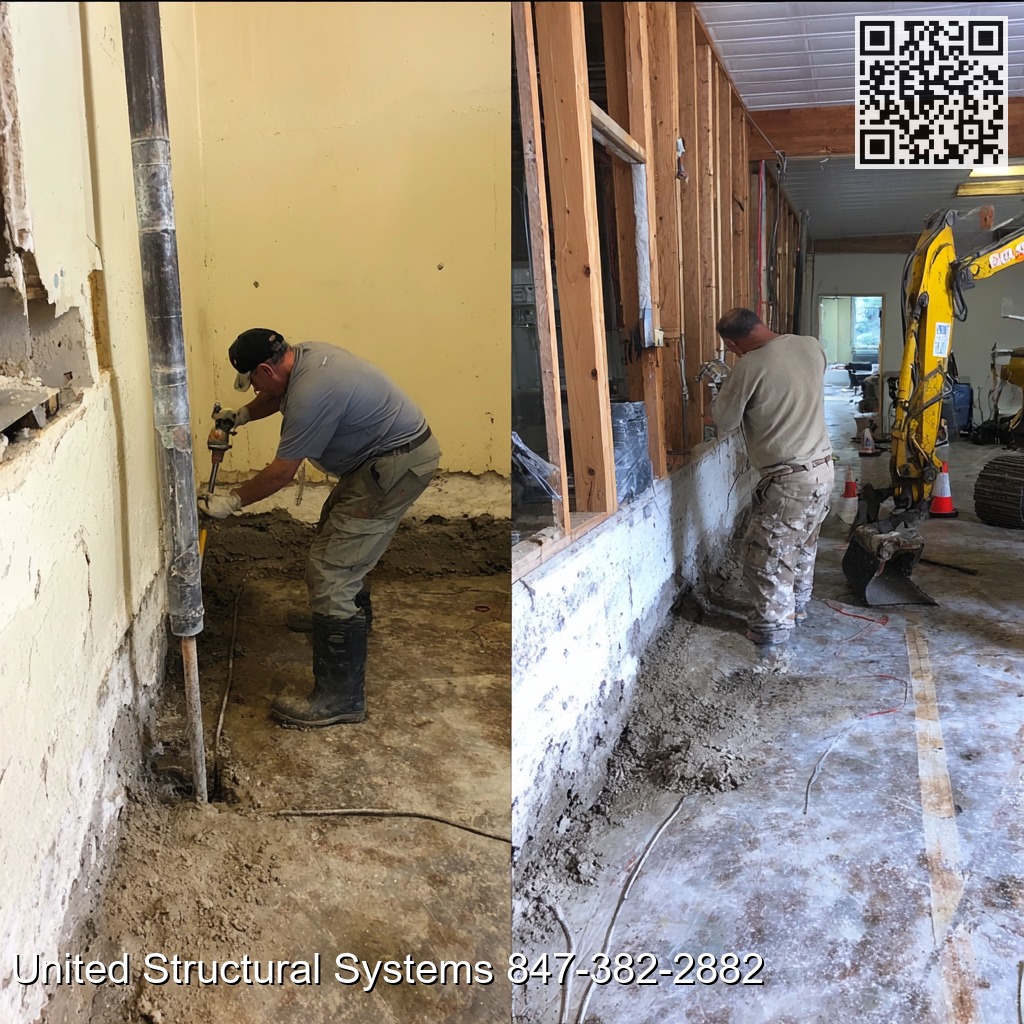
Commercial helical tieback anchor installation succeeds when staffs value the structure as well as the neighbors. Anchors installed coming from indoor rooms call for defense for appearances and dust control. Fit-for-purpose devices, often a twist electric motor installed on a mini-excavator or skid-steer, needs adequate space to cultivate torque without jumping off a row line. Where room is cramping, hand-held hydraulic devices can install smaller-diameter helical anchors, yet you trade rate and also capacity.
On a medical facility retrofit, our installation window flew 9 p.m. to 5 a.m. to stay clear of obstructing imaging suites. Our experts sequenced supports in order that no more than 2 adjacent anchors were actually mounted at once, staying clear of momentary reduction of wall structure support. Pre-staging walers and hardware in the day lowered sound at night. The supports were tensioned progressively, 25 percent to seating, 75 per-cent to technique design, at that point total lots after a fast pressure examination. That stepwise method steers clear of shock loading a fragile wall.
For grouted tiebacks, the website has to accommodate grout batching and also spoil administration. In city basements, that could be the restriction that pushes the decision toward helical anchors. Where grout is needed for concept purposes, make use of a tremie cylinder to position grout coming from all-time low up and observe returns. Overdrilling without examining invites failure and polluted bond zones in delicate dirts. A little slip below comes to be a reoccuring routine maintenance telephone call later.
Integrating tiebacks along with various other repairs
Tiebacks are one element of structural foundation repair. They match naturally along with deep foundation repair methods used to take care of resolution or inadequate bearing. An usual series in commercial foundation stabilization resembles this: assistance gravitation bunches along with helical piles or even micropiles, support sidewise lots along with tieback anchors, then handle wall problem with gap treatment, patching, and waterproofing. That purchase maintains positioning as well as lowers additional damage in the course of repair.
When a wall has split, foundation crack repair through epoxy shot repairs architectural continuity, however just after activity is controlled. For damp walls, polyurethane split shot can quit water leaks just before epoxy repairs. In brickwork, carbon dioxide fiber straps can discuss tasks with tiebacks to confine bulging in between supports. The trick is actually realizing what each factor succeeds. Helical piles and also protection stacks deal with upright tons, micropiles take care of vertical bunch where stone is actually deep or gain access to is tough, helical tiebacks and also grouted anchors deal with side tons, and area repairs bring back longevity and also watertightness.
Costs, schedules, as well as what proprietors need to expect
Owners ask two inquiries: How much time will it take, and just how much will it set you back? The sincere solution is actually ranges with contingencies. For a regular commercial helical tieback task on a 100-foot wall with support space near 6 to 8 feets, anticipate 15 to 20 supports. Along with great accessibility as well as straightforward soils, a staff can install as well as stress 6 to 10 helical tiebacks daily. That generates a two to 4 time installment home window plus mobilization as well as prepare. Grouted anchors take longer as a result of boring, covering, as well as grout cure, often a week or even even more for similar scope.
Costs depend upon span, ability, accessibility, and also screening demands. Helical tieback rates commonly falls in between mid 4 figures to low five numbers per support for commercial environments, along with urban ventures on the upper edge. Grouted tiebacks could be identical per anchor but along with higher site strategies costs. What proprietors can easily rely on: jobs that invest in effective inspection as well as testing have less improvement purchases. The most inexpensive support that falls short a creep test is actually not a bargain.
Common downfalls and also exactly how to avoid them
The very most frequent mistake is addressing tiebacks as a cure-all without dealing with water as well as water drainage. A wall restrained by supports may still deteriorate from entraped wetness, freeze-thaw cycles, and also deterioration. Yet another mistake is actually neglecting geometric constraints. Supports can easily encounter utilities, tenant areas, or potential diggings. On a mixed-use job, an uncoordinated tieback pattern hampered an anchor renter's planned elevator pit 2 years eventually, as well as numerous anchors had to be actually left as well as replaced.
Overreliance on brochure capacities without site proof also leads to difficulty. I keep a record of installation torque, test bunches, and activities for each support, not just the exam supports. Patterns develop. If twist decreases unexpectedly in a region, probing further. It may be actually a laid to rest trough, a fill pocket, or a smooth joint. Adapting right away, along with the designer interacted, always keeps the task on track.
Choosing in between helical, protection, and also micropile systems
Engineers as well as specialists often experience a three-way option one of helical piles, protection stacks, and micropiles, specifically when repair work require both upright as well as lateral upgrades.
- Helical piles as well as helical anchors: Greatest when accessibility is confined, resonance has to be actually low, and also quick capability verification by means of torque is actually valuable. They fit a wide variety of soils however battle in quite heavy rocks along with cobbles or boulders. Resistance stacks: Tough alternative for remedying settlement deal under existing grounds where hydraulic ports can push heaps to rejection against the building. They are mostly upright components, certainly not lateral, unless organized in struggling pairs or even used along with walers. Micropiles: Strongly extremely versatile drilled-and-grouted aspects that work in tight spaces and also via obstructions, along with excellent functionality to stone. They bring higher tons yet include additional tools and grout handling than helical systems.
That fast comparison hides subtlety. The least timetable is not always the most affordable threat. A web site along with adjustable stuffing may argue for micropiles and also grouted tiebacks in spite of the slower rate, because exploration and also grouting may stabilize the variability. On the other hand, in uniform clay with reliable torque correlation, commercial helical pile installation alongside helical tiebacks turnouts rate, reduced disorder, and tidy documentation.
A quick field story
A waterside warehouse in the Southeast possessed a maintaining wall that bent 2 inches over 12 feet of elevation, pushing toward the inside. The wall backed up to a slender alley along with energies laced through the right-of-way. Digging was off the dining table. We mapped energies, at that point established a helical tieback pattern coming from the inside at 15 degrees listed below parallel, targeting a soft sand level at 18 to 24 feet where examination probings showed really good quality. Walers were actually rolled steel networks fastened along with glue dowels in to the wall structure. Our team put in 22 supports over three evenings, along with installation twists varying coming from 5,500 to 7,000 foot-pounds, associating to make loads of 25 to 35 kips. Evidence exams went properly, but pair of anchors presented higher-than-expected motion at lots. Dirt logs showed a thin residue lense at that elevation. Our team expanded those pair of anchors an added 5 feets to capture the deeper sand and retested. Motion fell to within criteria. 6 months after fulfillment, the wall stayed stable, the gap distances had actually certainly not expanded, and the interior room stayed dry out after hurricanes because of a brand new drainpipe and also sump.
That project enhanced a training I relearn on every project: the soil informs you what it are going to take, certainly not the other means around.
Quality command that pays for off
Documentation is part of the job. For office projects, keep a complete document: anchor IDs, sites, angles, sizes, coil arrangements or connect sizes, installation torques or cement quantities, examination tons, as well as activities. Pictures of heads and also walers after tensioning help future teams understand the repair service. Internet site inspectors as well as designers ought to examine the first many supports face to face, at that point at rational landmarks. These practices audio authoritative till the time a filling dock roof covering add-on changes surcharge onto a wall, and the owner Commercial Helical Pile Installation requests for the initial capacities and also variables of safety.
Corrosion security deserves attention. Hot-dipped priming, epoxy finishings, double deterioration security for grouted tiebacks with sheathing, as well as proper specifying at heads prolong service life. On coastal web sites or where de-icing sodiums exist, do certainly not skimp. Indicate the security system early therefore preparations perform certainly not jeopardize schedules.
Bringing it together
Tieback supports are actually not extravagant, but they are sincere. They bring in a quantifiable guarantee: administer a recognized counterforce where the structure needs it most. When joined intelligent drain, appropriate deep foundation repair components, and thoughtful detailing, they send back management to managers and location supervisors who require properties to function day in day out. The most ideal outcomes arise from restrained design, transparent testing, and crews who recognize both the construct as well as the dirt. If a wall structure is bowing or a basement is taking on water, the appropriate combo of helical tieback anchors, helical piles or micropiles, and also direct foundation crack repair can turn a slow issue right into a stable, foreseeable asset.